
Content and design
What should an online store home page include?
Organise your home page around the offer and the customer’s next step. Plan a useful hero, section order and featured product selection.
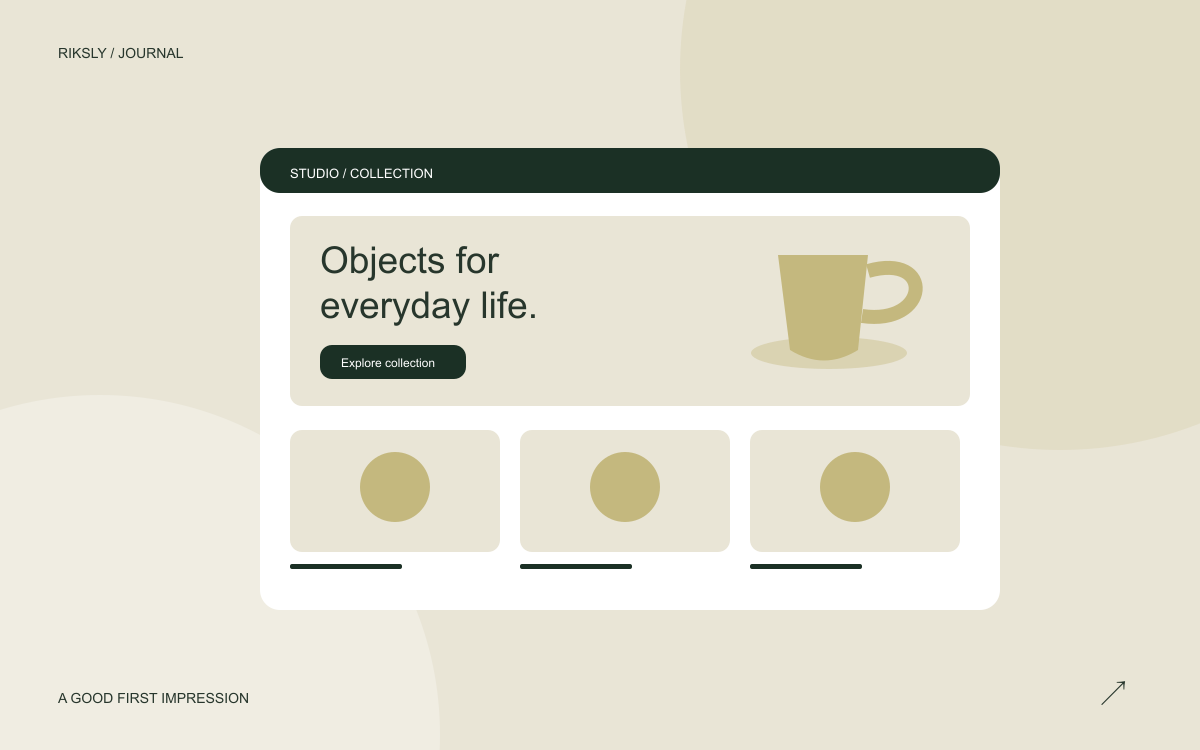
A store home page should quickly explain what is sold, who it is for and where to go next. Plan the information before choosing decorative effects.
Make the first screen useful
Name the offer plainly. “Ceramics for everyday rituals” provides more context than “Discover excellence”. Add a real distinguishing detail and one primary action leading into the collection. If text sits over an image, check contrast across the entire crop.
Introduce categories and selected products
Show clear paths into the main groups. Use labels and images that explain each other. Choose featured items deliberately: representative products or a current collection. Do not call an item a bestseller without supporting sales data.
Provide credible reasons to trust
Show the workshop, making process or actual service standards. Publish authentic reviews with appropriate context. A new store can use original photographs and a clear contact route instead of invented customer counters.
Keep service information accessible
Summarise delivery and link to the complete details. State real lead times and what they include. Group footer links into shopping, help and company information instead of filling it with search phrases.
A useful starting order
- A clear hero and primary action.
- Main categories.
- Selected products.
- The brand story or making process.
- Practical buying information.
- A footer with contact and relevant links.
Adapt this sequence to the offer. On mobile, check whether menus and buttons obscure products. Keep a section only when you can explain which customer decision it supports.